

Design the learning sequence
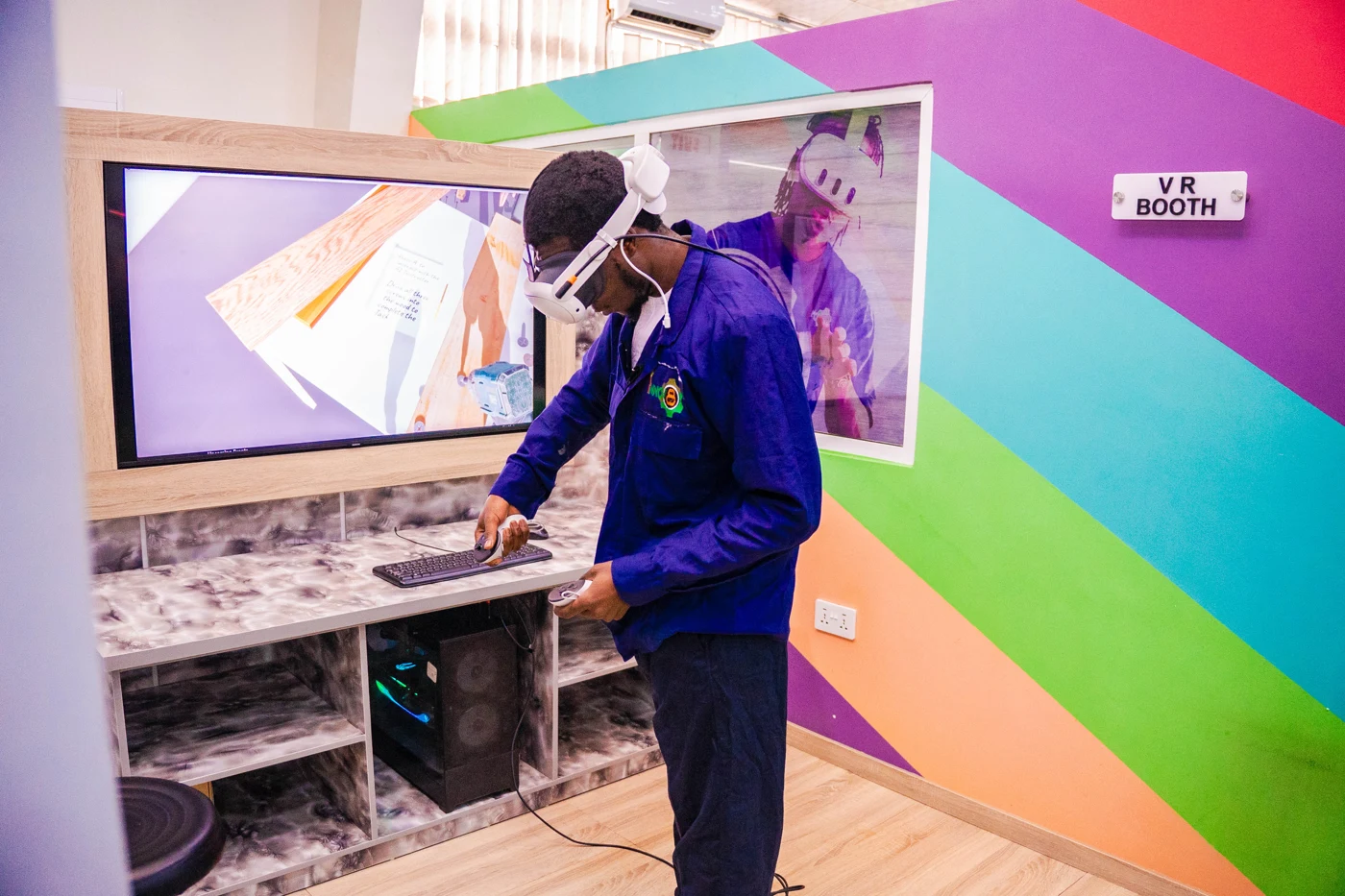
I led the prototype’s design and development at Innov8 Hub. The workshop flow, tutor interactions and progression mechanics had to work as one experience: entering an activity, receiving guidance, practising and seeing progress. Thinking about that sequence gives each interaction a reason to exist.
Use speech to navigate the workshop
One practical decision was to put spoken interaction into activity selection and workshop navigation. Unreal Engine provides the environment; a MetaHuman tutor connected through Convai provides a conversational point of contact within it. The interaction is tied to finding an activity and getting guidance in context.
A conversational interface still needs structure. The important design questions include what the learner can do, how guidance relates to the activity and how the experience responds when someone needs help. Those questions are as important as the visual setting.
A prototype with a clear next question
SkillForge won first place in the 2025 IEEE Metaverse Grand Challenge for Simulation-Based Learning. The linked demonstration shows the prototype and its interaction concept.
The broader question for this line of work is how to evaluate the relationship between guidance, practice and learning. That is a useful direction for future notes and experiments, separate from the recognition the prototype received.