Start with the question
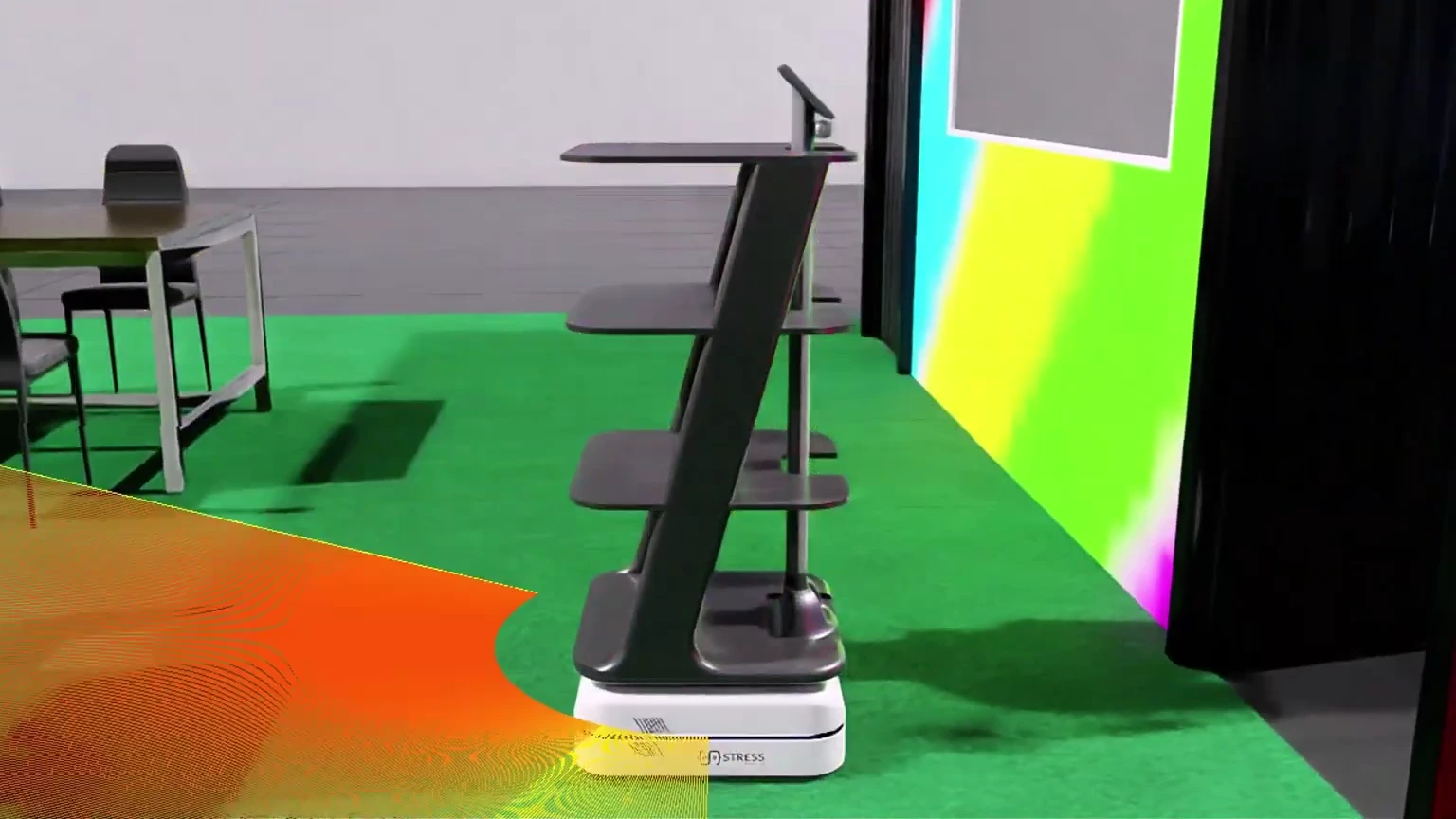
The purpose of a testbed is to help answer a development question. For Zero, the focus was how a service robot would move, perceive its surroundings and respond to commands in a lab setting. That purpose connects the mechanical model to the environment around it.
Connect sensing to robot software
I brought the custom robot and lab into Isaac Sim and connected the simulation with ROS 2. Virtual LiDAR, cameras and an IMU made sensing part of the setup, alongside articulation and physical contact. Navigation and teleoperation demonstrations then exercised those pieces together.
This is the useful distinction between a visual model and an engineering experiment: the scene needs a way to receive commands, produce observations and make behaviour inspectable. The environment helps give those observations context.
Keep the evidence alongside the model
The case study links the demonstration and code so the testbed can be understood through its behaviour as well as its images. A simulation is one part of a development workflow; the questions it answers depend on how its models, inputs and tests are defined.
For future build logs, I want to keep that relationship visible: what is being tested, how the setup changes and what the demonstration actually shows.