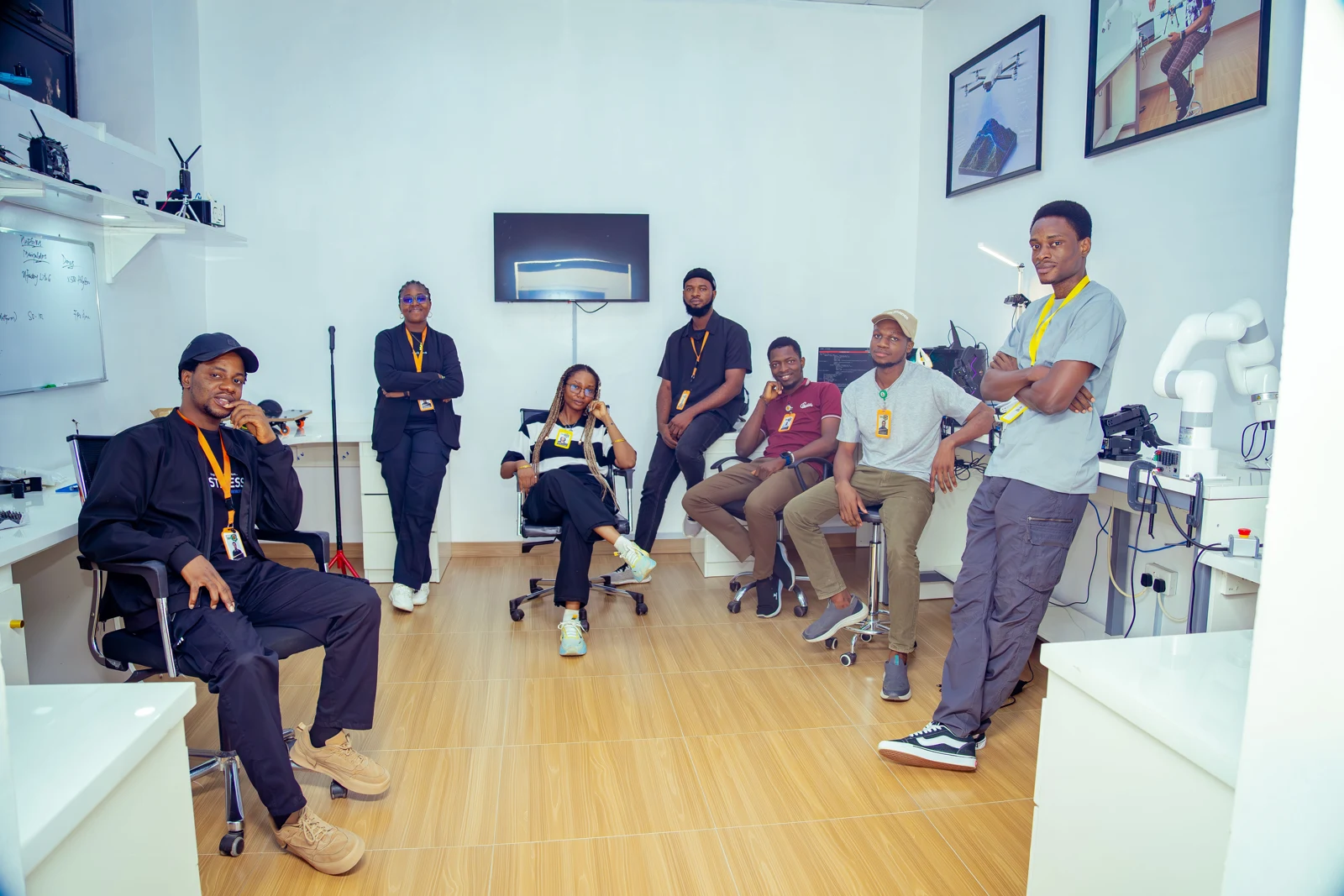
Zero brings a service-robot design and a model of the Innov8 Hub robotics lab into one simulation environment. I developed the testbed to examine movement, sensing and robot control together, while the design was still being explored digitally.
Simulation development
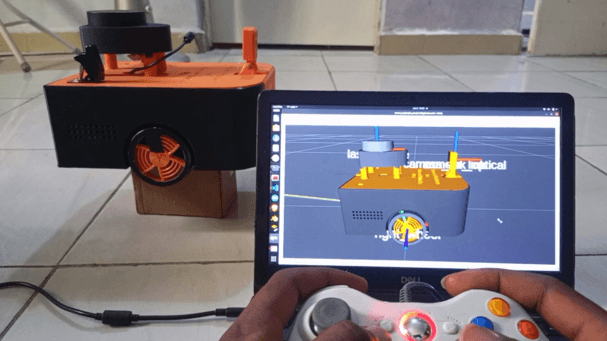
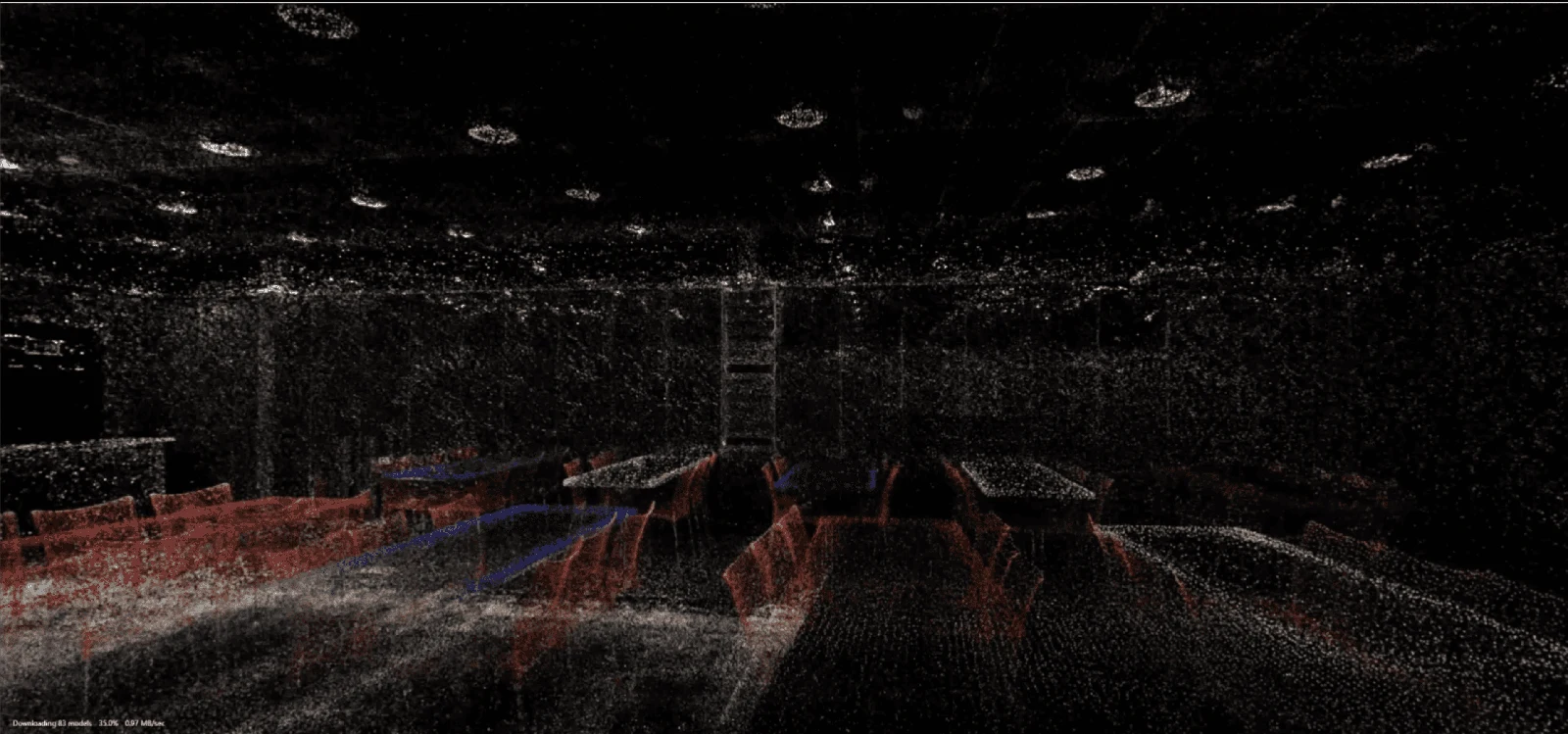
I built the robot model and laboratory digital twin, configured joints, colliders and rigid-body physics, and integrated virtual LiDAR, cameras and an IMU with ROS 2. I ran navigation and teleoperation tests in the simulated lab.
Development approach
I connected the mechanical model to a simulated scene, setting up articulation, contact behaviour and the sensor configuration. The lab model gave the robot a recognisable setting for movement and interaction, rather than treating the robot as an isolated visual asset.
The Robot Operating System (ROS 2) connection made the scene useful for software experiments. Virtual sensing, commands and robot motion could be exercised together through navigation and teleoperation tests. The practical emphasis was a repeatable environment for investigating behaviour and refining the design.
Outcome
The testbed reached working navigation and teleoperation demonstrations. Zero was selected as a Top 10 finalist in the NVIDIA / LycheeAI competition in 2025 and featured in an NVIDIA Omniverse livestream.